
2026/27 tax guide for limited company owners: should you pay yourself salary or dividends?
Dividend tax rates rose by two points in April 2026. We explain the balance between Corporation Tax, National Insurance and dividend tax with the latest figures.

Company profit: Corporation Tax
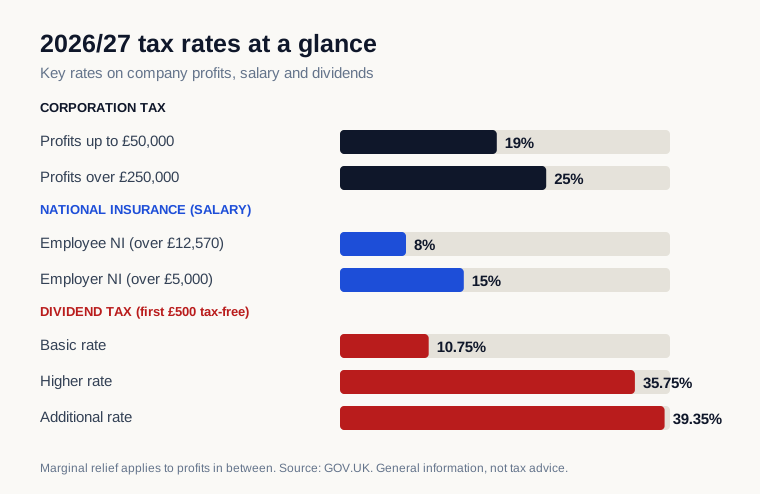
Limited companies pay Corporation Tax on profits: 19% on profits up to £50,000 (small profits rate) and 25% above £250,000 (main rate), with marginal relief in between. The thresholds are divided between associated companies.
Salary: Personal Allowance and NI thresholds
In 2026/27 the Personal Allowance is £12,570. Employee National Insurance is 8% on pay above £12,570 a year, and employer NI is 15% above £5,000 a year. Salary is a deductible cost for the company and helps you earn qualifying years for the State Pension.
Dividends: the new rates
Dividends are paid from taxed profits. In 2026/27 the first £500 is tax-free (dividend allowance); above that, dividends are taxed at 10.75% (basic), 35.75% (higher) and 39.35% (additional). The basic and higher rates are two points up on the previous year.
The classic approach and its limits
Many directors take a small salary to protect their NI record and draw the rest as dividends. But with the employer NI threshold at £5,000 and dividend rates higher, the 'optimal salary' calculation has shifted, and whether the company can claim the £10,500 Employment Allowance matters too. Single-director companies with no other employees usually can't.
Pension contributions
Company contributions straight into a director's pension are usually deductible for Corporation Tax and aren't taxed like salary or dividends. They can be one of the most tax-efficient ways to extract money over the long term, within the annual allowance. This article is general information, not tax, financial or legal advice. Speak to a qualified accountant about your own situation.
This article is general information, not legal or financial advice. Always check the latest rules on GOV.UK or with a regulated professional.
Sources
Contains public sector information licensed under the Open Government Licence v3.0.


