
Home insurance guide: buildings or contents? 2026 prices and record claims
Home insurance prices fell 4.4% in a year, but subsidence claims hit a record after the hot summer. What should renters and owners insure?

Two parts: buildings and contents
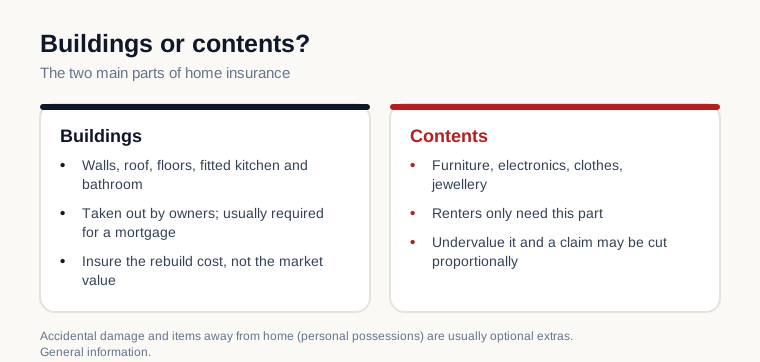
Home insurance has two main parts. Buildings cover protects the walls, roof, floors and fitted kitchen and bathroom; homeowners take it out, and it is usually required for a mortgage. Contents cover protects movable items such as furniture, electronics, clothes and jewellery. Renters don't need buildings cover, which is the landlord's responsibility, but are advised to insure their own belongings.
Where are prices?
Defaqto data shows competitive home insurance quotes in September 2026 were 4.4% cheaper than a year earlier and 16.9% cheaper than two years earlier. Consumer Intelligence also measured a 2.2% fall over three months. But ABI figures show the average combined buildings and contents premium actually paid rose to £389 in the third quarter, from £383 in the second. Defaqto says prices could flatten or start rising towards the end of the year.
Record claims: subsidence and fire
According to the ABI, the average home and business claim hit a record £10,000 in the third quarter. The hot, dry summer drove up subsidence claims in clay-soil areas: the average subsidence payout is £20,000 and the average domestic fire claim £38,000. Much of London sits on clay, so the risk applies to the capital too.
Insure the right amount
Buildings cover is based on the rebuild cost, not the market value; it is often lower than the market value and appears in your mortgage valuation report. For contents, work out what it would cost to replace everything new. If you undervalue, the insurer can cut a claim in proportion (this is called underinsurance).
Extras and flood risk
Standard policies don't always include accidental damage (paint spilt on the carpet, a TV knocked over); it is usually an add-on. For phones, bikes or jewellery you take out of the house you may need 'personal possessions' cover. In flood-risk areas, homes built before 1 January 2009 can more easily get affordable cover thanks to Flood Re, a joint scheme between government and insurers. You can check your home's flood risk with the GOV.UK tool. This article is general information, not financial or legal advice.
This article is general information, not legal or financial advice. Always check the latest rules on GOV.UK or with a regulated professional.


