
Making Tax Digital is here: digital records and quarterly updates for sole traders and landlords
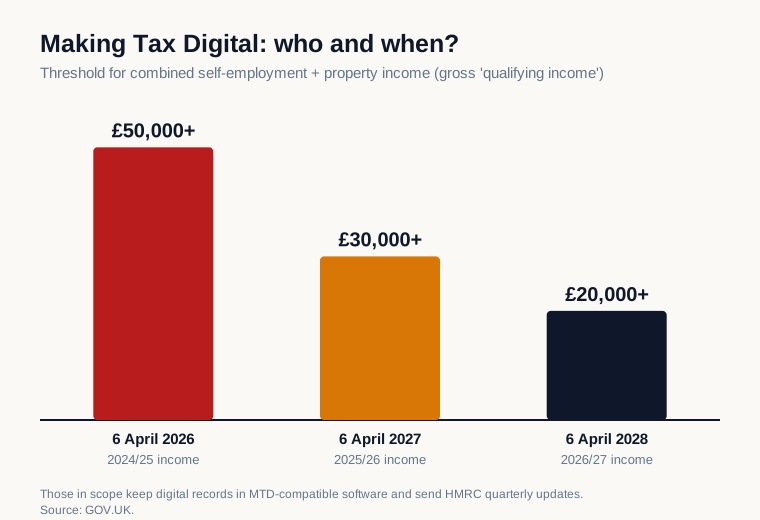
Since April 2026, people with self-employment and property income over £50,000 must send quarterly updates to HMRC using compatible software. The threshold drops to £30,000 in 2027 and £20,000 in 2028.

Making Tax Digital for Income Tax covers sole traders and landlords registered for Self Assessment. What counts is your 'qualifying income' — gross self-employment and property income before expenses. Salary, dividends and interest aren't included.
Thresholds and dates
If your qualifying income was over £50,000 in 2024/25, MTD started on 6 April 2026. Over £30,000 in 2025/26 means 6 April 2027, and over £20,000 in 2026/27 means 6 April 2028. HMRC writes to people who will need to join.
What changes
You must keep digital records of income and expenses in MTD-compatible software and send a quarterly update to HMRC through it, then finalise your return through the software at year end. Paper records or a spreadsheet alone aren't enough; if you use a spreadsheet you need bridging software that connects to HMRC.
Steps to prepare
Work out your qualifying income first. Choose software from HMRC's list — some have free versions. Linking your bank account makes record-keeping easier, and keeping business and personal spending separate speeds up quarterly updates.
Exemptions and penalties
People who can't use digital tools because of age, disability or internet access can apply for exemption as 'digitally excluded'. Late submissions are covered by a points-based penalty system, and late payments bring separate penalties and interest. This article is general information, not tax, financial or legal advice. Speak to a qualified accountant about your own situation.
This article is general information, not legal or financial advice. Always check the latest rules on GOV.UK or with a regulated professional.
Sources
Contains public sector information licensed under the Open Government Licence v3.0.


