Leasehold reform timeline: £250 ground rent cap 2028, ban by 2031
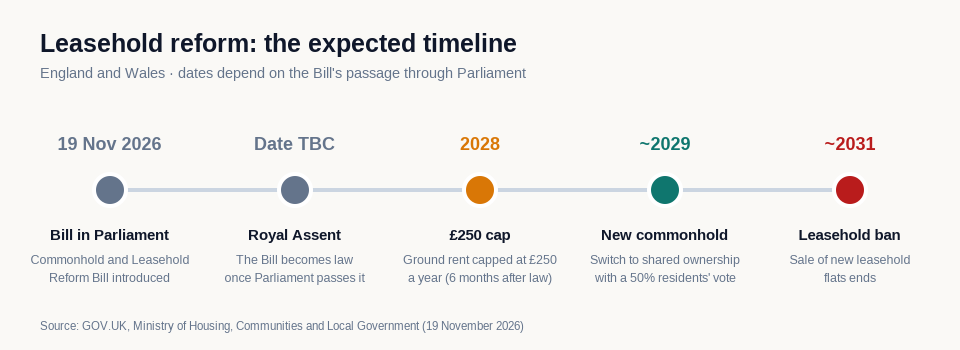
The Commonhold and Leasehold Reform Bill, which will change home ownership in England and Wales, is now before Parliament. The government expects the £250 ground rent cap in 2028, the new commonhold model around 2029 and a ban on selling new leasehold flats around 2031.

The government introduced the Commonhold and Leasehold Reform Bill, which will phase out leasehold in England and Wales, to Parliament on 19 November. According to a statement from the Ministry of Housing, Communities and Local Government on GOV.UK, the Bill comes with the clearest timetable yet for when the reforms are expected to take effect.
2028: a £250 ground rent cap
The government plans to bring the £250 annual ground rent cap into force six months after the Bill becomes law, which is expected in 2028. It says the cap could benefit up to one million leaseholders, describing the earlier date as a new commitment to speed up ground rent relief.
Around 2029: a new commonhold model
A revived commonhold system is expected to be up and running around 2029. Under commonhold, flat owners own the building together, with no ground rent, no expiring lease and no third-party freeholder. For existing leasehold buildings to convert, a 50% vote of residents will be enough instead of everyone having to agree.
Around 2031: no more new leasehold flats
A ban on selling new leasehold flats will take effect two and a half years after the commonhold model comes into force, around 2031. The government says the transition gives buyers, lenders and developers time to prepare. Since 2002, fewer than 20 commonhold developments with fewer than 200 flats in total have been created.
What's in it for existing leaseholders?
The Bill abolishes forfeiture, which can put a home at risk over small unpaid sums, replacing it with a fairer court-led system. The government says debts as low as £350 can currently trigger that risk.
The package also includes powers to cap admin and permission fees, a right to 990-year lease extensions, scrapping marriage value and, in most cases, stopping leaseholders paying their landlord's costs. Building owners will also have to check their buildings' condition and build up funds for major works in advance, to avoid shock bills for jobs like roofs or lifts.
Are the dates fixed?
No. The government says all measures depend on parliamentary approval and Royal Assent, and commencement dates depend on the Bill's progress. A more detailed implementation roadmap will be published closer to Royal Assent. Housing Minister Matthew Pennycook called the Bill a "historic step towards dismantling the feudal leasehold system".
This article is general information, not legal or financial advice. Always check the latest rules on GOV.UK or with a regulated professional.
Sources
- GOV.UK — Historic move to dismantle leasehold and transform homeownership
- GOV.UK — Commonhold implementation: Direction of Travel
- GOV.UK — Moving to commonhold: banning leasehold for new flats (government response)
Contains public sector information licensed under the Open Government Licence v3.0.