
How to build a UK credit score from scratch: eight golden rules for newcomers
From phone contracts and renting to mortgages and credit cards, much of UK life depends on your credit history. A step-by-step plan for newcomers.

First: there's no single 'score'
The UK has three main credit reference agencies — Experian, Equifax and TransUnion. Each uses its own scale, and lenders judge the information in your file against their own rules, not these scores. So the aim is to strengthen your file rather than chase a number. You have a legal right to see your report from each for free.
1–2. Electoral roll and a stable address
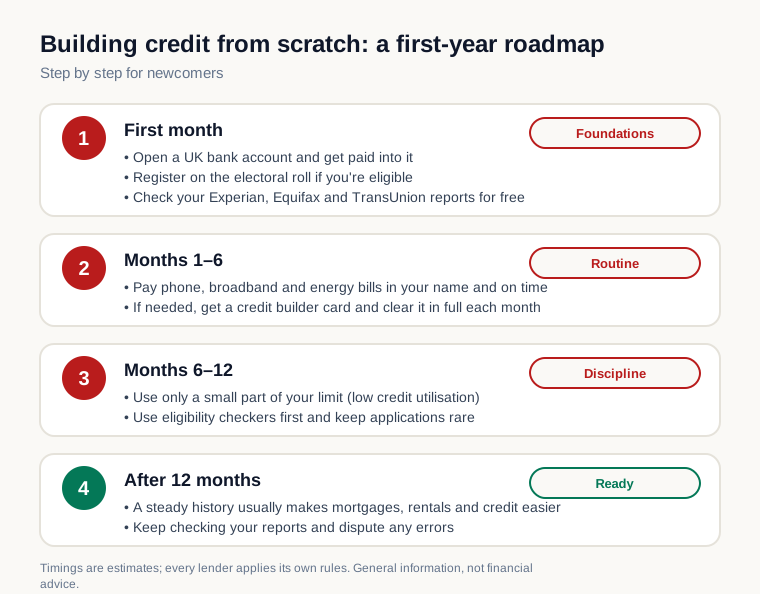
If you're eligible to vote (for example British, Irish and Commonwealth citizens), register on the electoral roll — one of the strongest ways to confirm your address. If you can't vote, make sure your address is consistent and up to date on your bank, bills and tenancy. Frequent moves can weaken your file.
3–4. A bank account and regular bills
Open a UK bank account and have your salary paid into it. Paying phone, broadband and energy bills in your own name and on time builds the foundations of a credit history. Some services can also add rent payments to your file.
5–6. Use a credit card wisely
'Credit builder' cards for people with no history can be a first step. Make small regular purchases and clear the full balance every month by direct debit. Using most of your limit (high credit utilisation) hurts your file; keeping usage low is common advice.
7–8. Limit applications and fix errors
Lots of credit applications in a short time leave marks on your file. Use eligibility checkers first — they usually use soft searches that don't show. Dispute wrong addresses or debts that aren't yours with the agency. Credit history takes time: expect a few months to a year to see results from steady habits. This article is general information, not financial or tax advice.
This article is general information, not legal or financial advice. Always check the latest rules on GOV.UK or with a regulated professional.


