
ISA guide: how to use your £20,000 tax-free allowance — and the 2027 cash ISA change
The difference between cash and stocks & shares ISAs, the Personal Savings Allowance, and the cut in the cash ISA limit to £12,000 for under-65s from April 2027.

An Individual Savings Account is a wrapper where interest, dividends and gains are tax-free. In 2026/27 you can pay up to £20,000 across all your ISAs. Types: cash ISAs, stocks and shares ISAs, innovative finance ISAs and Lifetime ISAs (up to £4,000 a year, within the total).
Cash or stocks and shares?
A cash ISA earns interest like a savings account — your capital is safer but may lag inflation over time. A stocks and shares ISA invests in shares and funds, which can fall in value but generally offers more growth potential over the long run. A common approach is cash for short-term needs and emergencies, and investments for goals five years or more away.
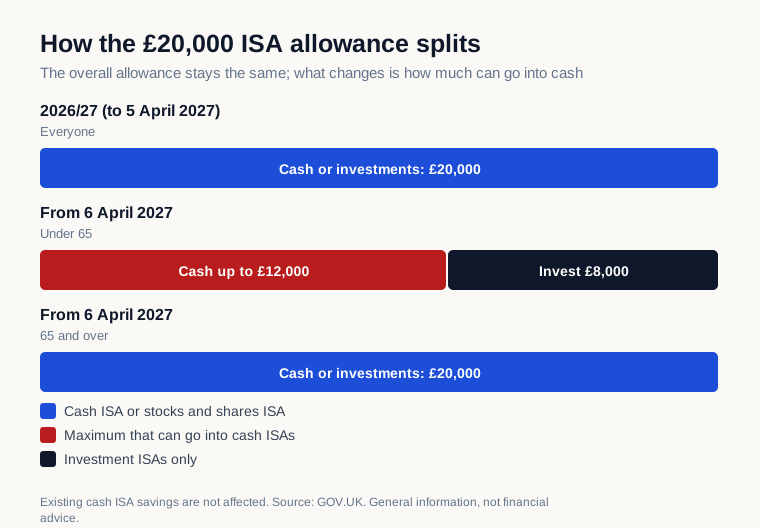
April 2027: cash ISA limit falls to £12,000
Under the November 2025 Budget, from 6 April 2027 people under 65 can put no more than £12,000 of their £20,000 allowance into cash ISAs, with the remaining £8,000 available for investment ISAs. Those 65 and over keep the full £20,000 cash allowance. Existing cash ISA savings aren't affected.
Interest outside ISAs: the Personal Savings Allowance
Some interest on savings outside ISAs is tax-free too: £1,000 a year for basic-rate taxpayers and £500 for higher-rate taxpayers, with none for additional-rate taxpayers. People on low incomes may also benefit from the starting rate for savings of up to £5,000. As rates rise, it's easier to exceed these limits — making ISAs more valuable.
Junior ISAs for children
Up to £9,000 a year can go into a Junior ISA for under-18s; the money passes to the child at 18. Family and friends can contribute. This article is general information, not financial or tax advice.
This article is general information, not legal or financial advice. Always check the latest rules on GOV.UK or with a regulated professional.
Sources
Contains public sector information licensed under the Open Government Licence v3.0.


