
State Pension and private pensions explained: how many National Insurance years do you need for a full UK pension?
The full new State Pension is £241.30 a week and needs 35 qualifying years of National Insurance. How to fill gaps, make the most of employer contributions and use pension tax relief.

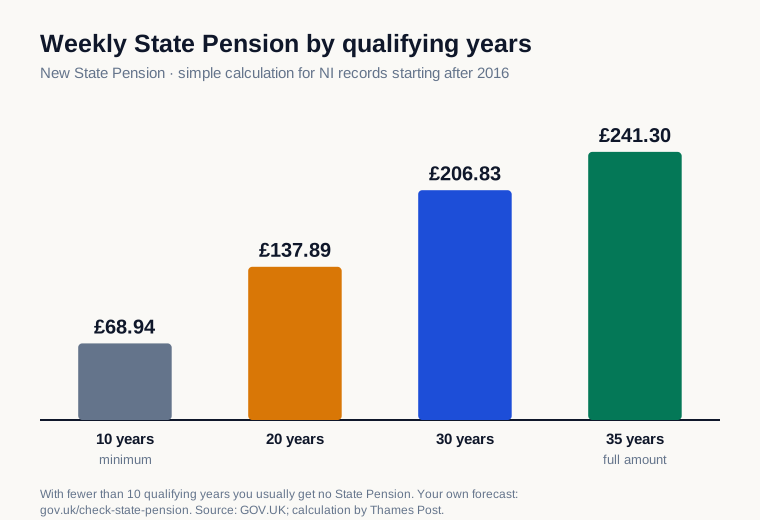
The full new State Pension is £241.30 a week. If your National Insurance record started after April 2016, you need 35 qualifying years for the full amount. As a general rule you need at least 10 years to get any State Pension, with a proportional amount in between.
The pension age is rising
State Pension age is rising gradually from 66 to 67 between 2026 and 2028. Check your own age and forecast with GOV.UK's 'Check your State Pension forecast' service.
Filling gaps
If your NI record has gaps, you can usually fill those from the last six tax years with voluntary National Insurance contributions. It isn't always worth it — if you'll reach 35 years anyway, extra payments may not help — so check your forecast first. Parents claiming Child Benefit for a child under 12 can also earn NI credits.
Workplace pensions: don't miss free money
Under auto-enrolment your employer pays at least 3% of qualifying earnings, and with your 5% the total is 8%. Some employers match higher contributions. Opting out means giving up the employer's contribution.
Tax relief
Pension contributions get tax relief: for basic-rate taxpayers, every £80 you put in becomes £100. Higher-rate taxpayers can claim extra relief through Self Assessment — making pensions one of the most efficient ways to save long term. This article is general information, not financial or tax advice.
This article is general information, not legal or financial advice. Always check the latest rules on GOV.UK or with a regulated professional.
Sources
Contains public sector information licensed under the Open Government Licence v3.0.


