
Bank of England raises rates to 4%: what it means for mortgages, rents and savings
The Bank raised Bank Rate by a quarter point to 4% on 5 November as energy-driven inflation climbed. We worked out the monthly impact for tracker borrowers — and what changes for fixed-rate borrowers and savers.

What happened
The Bank of England's Monetary Policy Committee raised Bank Rate from 3.75% to 4% at the meeting ending 4 November, announced on 5 November. Eight members voted for a quarter-point rise and one for half a point.
Why
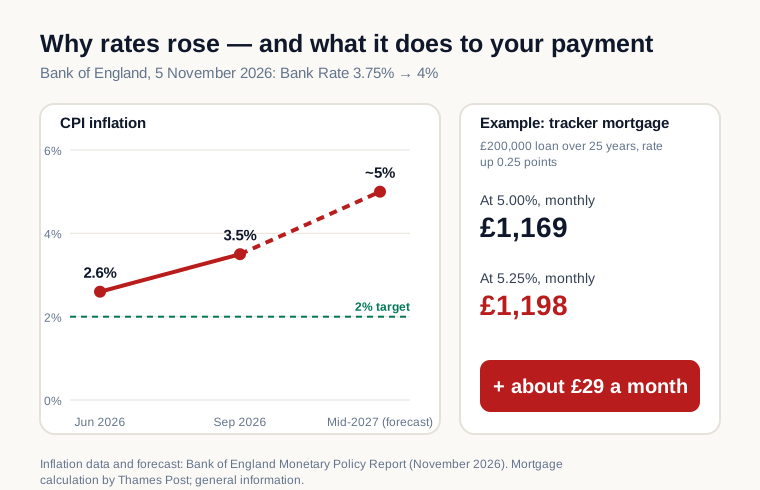
CPI inflation rose from 2.6% in June to 3.5% in September, driven largely by energy prices, and the Bank expects it to reach about 5% by mid-2027. The Committee said knock-on effects on other prices and wages were limited so far, but inflationary pressure in the pipeline warranted a rise. The Bank stressed policy is not on a pre-set path and will be decided meeting by meeting.
Will your mortgage change?
Tracker mortgages and most standard variable rates rise quickly. By our worked example, on a £200,000 repayment mortgage over 25 years, a rate rise from 5% to 5.25% adds about £29 a month. Fixed-rate borrowers' payments don't change until their deal ends, though new fixed deals tend to price in expectations early.
Renters and savers
Higher rates raise landlords' financing costs and can feed into rents over time, though under the Renters' Rights Act rents can rise only once a year to market level. For savers, higher rates usually mean better deals — check whether your bank has passed it on and switch if not.
What's next
According to published schedules, the next decision is due on 17 December 2026. Mortgage deals can change within days of a decision, so anyone with a deal ending soon may benefit from talking to a broker early. This article is general information, not financial or tax advice.
This article is general information, not legal or financial advice. Always check the latest rules on GOV.UK or with a regulated professional.


