
What is comprehensive car insurance and what does it cover? The three types explained
Car insurance in the UK comes in three main levels. 'Fully comprehensive' doesn't mean everything is covered: the excess, add-ons and exclusions decide what a policy is really worth.

The legal minimum: third party
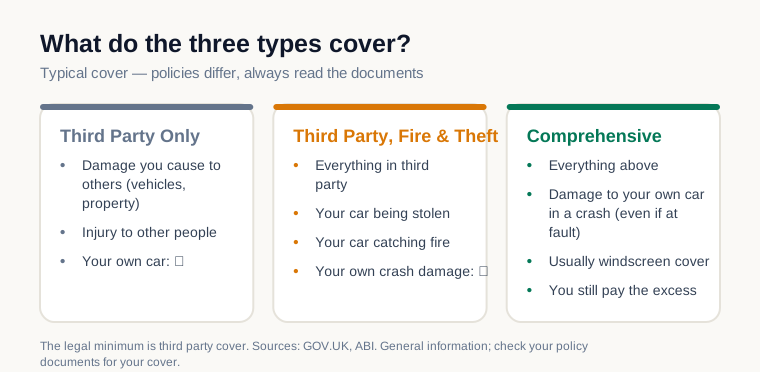
To drive in the UK you must have at least third party insurance. It covers damage and injury you cause to other people, their vehicles, animals or property, but not repairs to your own car. Drivers caught uninsured can get a £300 fixed penalty and 6 points; if the case goes to court they face an unlimited fine and disqualification, and police can seize the vehicle.
The middle tier: third party, fire and theft
This adds cover if your car is stolen or catches fire, but not for damage to your own car in a crash. It was once seen as the budget option, but today comprehensive cover can often be cheaper, because insurers may see drivers who choose lower cover as higher risk. Get prices for all three levels before you decide.
Comprehensive: what does 'fully' mean?
Fully comprehensive cover adds damage to your own car in a crash, even if it was your fault, and most policies include windscreen cover. But 'fully' can mislead: wear and tear, mechanical breakdown, theft when the keys were left in the car and undeclared use (such as delivery work) are usually excluded. Cover to drive other people's cars ('driving other cars') is now missing from many policies or limited to third party.
The excess and no claims discount
The excess is what you pay towards a claim, and it has two parts: the compulsory excess set by the insurer and the voluntary excess you choose. A higher voluntary excess lowers your premium but means paying more when you claim. Each claim-free year builds a no claims discount; you can pay extra to protect it, but that doesn't stop your premium rising.
Add-ons
The main optional extras are legal expenses (to recover money you lose in a crash that wasn't your fault), breakdown cover, a courtesy car (often only while repairs are done at an approved garage, and usually a small car), and key and misfuelling cover. For new or financed cars, GAP insurance covers the difference between the market value your insurer pays after a write-off and what you owe or paid. Choose each extra on whether you really need it. This article is general information, not financial or legal advice.
This article is general information, not legal or financial advice. Always check the latest rules on GOV.UK or with a regulated professional.
Sources
Contains public sector information licensed under the Open Government Licence v3.0.


