
Government support for families in the UK: 2026 rules for Child Benefit, Tax-Free Childcare and Universal Credit
Child Benefit is £27.05 a week, the high-income charge starts at £60,000 and the two-child limit in Universal Credit was abolished in April 2026. Which support each income group can get.

Child Benefit
Child Benefit is paid for each child under 16 (or under 20 in education): £27.05 a week for the eldest or only child and £17.90 for each additional child. There's no income limit, though higher earners may have to pay some back. Claiming also gives the parent National Insurance credits, which matters for lower earners and parents not working.
Higher earners: the HICBC
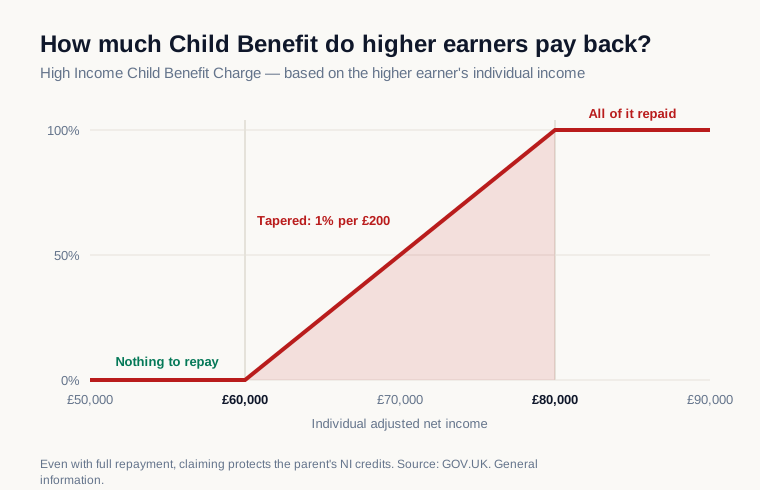
If either parent's individual adjusted net income exceeds £60,000, the High Income Child Benefit Charge applies. It tapers up so that at £80,000 it equals the full Child Benefit. Even then, claiming but opting out of payments can protect NI credits.
Tax-Free Childcare and free hours
With Tax-Free Childcare, the government adds £2 for every £8 you pay into a childcare account, up to £2,000 a year per child (£4,000 for disabled children). In England, working parents can get up to 30 hours a week of free childcare from nine months old until school, and all three- and four-year-olds get 15 hours. Income conditions apply.
Universal Credit: the two-child limit has gone
The two-child limit, which stopped extra payments for third and subsequent children in Universal Credit, was abolished on 6 April 2026. Existing claims were updated automatically and payments were not backdated. The limit never applied to Child Benefit.
Which support fits you?
Eligibility depends on income, work, number of children and immigration status; people whose visas carry 'no recourse to public funds' can't access most of this support. Check what you're entitled to with free, officially recognised benefit calculators. This article is general information, not financial or tax advice.
This article is general information, not legal or financial advice. Always check the latest rules on GOV.UK or with a regulated professional.
Sources
Contains public sector information licensed under the Open Government Licence v3.0.


